
When I was promoted to Production Manager at a fast-growing content agency, I stepped into a role that didn’t yet exist in a structure that wasn’t built to scale. The company had more than 30 active clients and over 45 team members, but no clear ownership over the production process. Work was getting done, but not efficiently, consistently, or sustainably.
As someone who had previously worked as both Account Manager and Operations Strategist, I had already seen where things broke down: lack of clarity, fragmented workflows, and a culture of “not my job.” I knew we couldn’t solve those problems with another patch or workaround. We needed systems that empowered people, streamlined processes, and could withstand rapid growth and shifting priorities.
This is the story of how I scaled production operations during organizational change—not by waiting for direction, but by building the foundation myself.
Proactively shaping my role
While working as the Operations Strategist, I spent time documenting SOPs and analyzing our workflows. That’s when I noticed the recurring bottlenecks in production. Everyone could see them, but no one was addressing them. I cared, because I had once been the person keeping that system together as an Account Manager, even when it wasn’t technically my job.
Watching things fall through the cracks felt frustrating. It wasn’t just inefficiency. It was a culture of “not my job,” and I wasn’t willing to ignore it.
So I proposed a new role: Content Production Specialist. I drafted the responsibilities, outlined the workflows, and even included a description of the kind of person who’d thrive in the role—someone who understood the systems, the people, and the details. It became clear that person was me.
Management agreed, and added writer workload management to the scope of the role. What I didn’t expect was to be made the manager of a newly formed team. That unexpected promotion became the starting point for everything that followed.
Leading through transitions
While still adjusting to my first formal leadership role, the team was hit with several back-to-back transitions. The departure of my manager created uncertainty across the organization, and within weeks I was also asked to make tough personnel decisions due to budget constraints. These moments tested my ability to lead with clarity and calm, but also to build systems that could hold steady even when everything else was in flux.
The challenge
My direct manager, who had long been seen as the glue of the team, resigned unexpectedly. Her departure caused anxiety and confusion, especially for newer team members. On top of that, I was tasked with repositioning team members due to salary misalignment, and eventually reducing the team’s budget by two-thirds. It was a high-stress moment in an already fast-moving environment.
The action
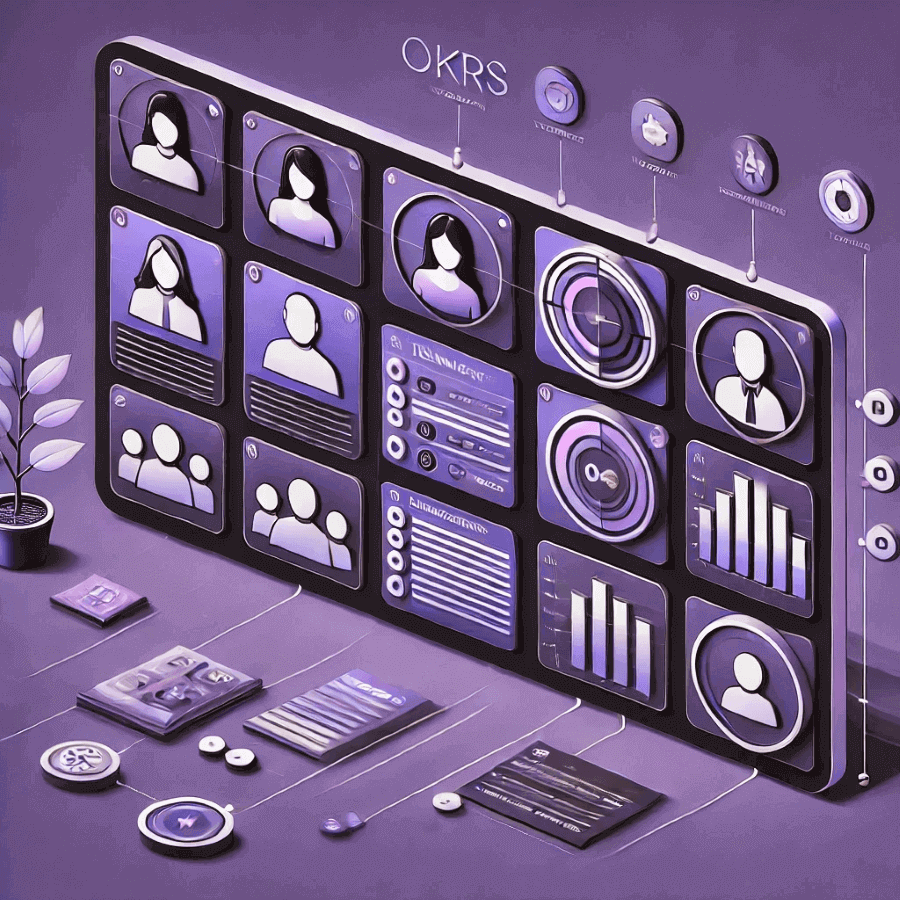
I focused on stabilizing the team through structure and communication. I introduced centralized team pages in ClickUp, created personal OKR dashboards, and rolled out new systems for feedback and performance reviews. I also increased cross-functional visibility by inviting members of other departments to our meetings and ensuring my team was seen and heard beyond the production workflow. To keep morale strong, I built in space for small rituals and team-building at the end of each meeting.
The result
Over the next three months, our team’s satisfaction levels rebounded to 95%. We remained focused, collaborative, and productive throughout the changes. The systems and processes I introduced became reference points for other teams, and our group was consistently held up as an example of effective team culture during change.
Scaling the production workflow
As demand grew and the company’s client roster expanded, it became clear that our existing systems were no longer enough. We needed a new approach: one that could bring order to a complex, fast-paced workflow without adding unnecessary friction for the team. I focused on building a production system that not only improved efficiency, but also empowered the people using it.
The challenge
As the company scaled rapidly—serving over 30 clients with a growing editorial team—our production process needed to evolve. There were frequent delays, communication breakdowns, and a lack of visibility into who was responsible for what. The existing systems simply couldn’t keep up with the volume or complexity of the work.
The action
I built a ClickUp-based production system—partly from scratch and partly by refining existing elements. This included SOPs for every handoff, role-specific responsibilities, and automated workflows for assigning, reviewing, and tracking content from idea to delivery. Topics were assigned based on each writer’s experience, reliability, and availability, ensuring optimal output without burnout.
I also created a new system to keep clients informed about their content’s production status, replacing an outdated, inconsistent process. At the same time, I established structured communication loops between the Strategy, Editorial, and Delivery teams to improve alignment and execution.

The result
Turnaround time from topic approval to article readiness dropped by 35%. Writers had clearer expectations, editors experienced fewer bottlenecks, and the client delivery experience became more consistent and efficient. The team went from reactive to proactive, no longer scrambling to keep up, but setting a new operational standard.
Building a self-sufficient team
As my team gained confidence and the systems matured, my focus shifted from stability to autonomy. I didn’t just want a team that could execute. I wanted a team that could lead. That meant building in trust, ownership, and opportunities for growth, even during high-pressure periods.
The challenge
The team was functioning well, but we were still heavily reliant on me for key decisions and coordination. I knew that wasn’t scalable. If I stepped away, progress slowed. I wanted to give my team the tools, structure, and space they needed to lead independently, while still maintaining quality and accountability.
The action
I started by inviting each team member to take ownership of small internal projects. From managing meeting agendas to leading discussions, I gradually handed over key responsibilities. We introduced rotating leadership in our meetings and set aside 15 minutes at the end of each session for team-building and informal connection.
I also created backup workflows and planned my time off strategically by giving team members the chance to step up without my presence. Throughout, I offered coaching in the background and created documentation that would support them whether I was there or not.
The result
The team rose to the challenge. Ownership increased, confidence grew, and I saw new leaders emerge. They didn’t just hold the fort. They made it better. Our team meetings became more collaborative and intentional, and the systems we built allowed for consistent delivery, even when I wasn’t in the room. Most importantly, the team continued delivering without disruption, proving that the systems and the people could stand on their own.

Building the automation function
After my manager left, I became the only person with a full understanding of how our production systems worked. That included workflows the rest of the team had never been involved in, like the automations handled by a long-standing virtual assistant (VA), who had previously reported only to my manager.
The challenge
The VA played a critical role in generating content delivery documents through Zapier and fixing automation issues, but she operated in isolation. Requests were often ignored, communication was limited to Slack tags, and no one else had visibility into her process. Once she came under my supervision, I realized there was no documentation, no support structure, and no accountability. And more than that: the automations themselves were inefficient, fragile, and slowing us down.
The action
I started by creating a performance improvement plan in partnership with her agency. We outlined clear expectations, timelines, and goals, but despite agreeing on the plan, nothing changed. After repeated issues and missed responsibilities, I made the decision to offboard her.
With no one else trained on the systems, I jumped in myself. I taught myself Zapier, reverse-engineered the workflows, and quickly found ways to simplify and streamline everything. I redesigned the entire automation process to be faster, more reliable, and less dependent on one person. Then, I created detailed SOPs so no one would ever have to scramble to figure it out again.
When I hired a new VA for the role, everything was already documented. Even when my first candidate became unexpectedly unavailable, onboarding the next one was simple, fast, and repeatable because the system was already in place.

The result
The improvements I made personally reduced automation errors by 90%, decreased the time to generate content cards by 25%, and cut our reliance on Zapier in half. More importantly, the role went from an opaque, fragile dependency to a scalable function supported by clear SOPs, structured onboarding, and shared team knowledge.
Embracing leadership and driving innovation
By the time I became Production Manager, I had already spent months observing how organizational dynamics and people-pleasing decisions were creating silos, redundancies, and inefficiencies across the production workflow. My early requests for clarity and shared ownership had been dismissed, so I redirected my focus into building what I could: SOPs, systems, and stability for my own team.
The challenge
When our client base began to shrink, we were asked to reduce budgets across the team. But cost-cutting alone wouldn’t solve the problem. I knew the real opportunity was in streamlining overlapping processes. Specifically, I suggested merging two teams that had been created to serve similar functions but operated in isolation, duplicating effort and creating avoidable delays.
The problem was: I wasn’t in a position to make that decision yet. My new manager had recently joined, and while she was open, she had been warned that I had “conflicts” with the other team. Trust had to be earned.

The action
Instead of pushing back, I focused on delivering results. I continued improving systems, led my team with transparency, and created documentation to highlight where redundancies were costing time and resources. I proposed a long-term solution: dissolve the artificial separation between the teams and instead build client-specific content specialists who could manage end-to-end delivery and strengthen client relationships.
It took four months, but when my manager saw the consistency of the issues—and the clarity of the solution—she approved the proposal.
The result
That decision marked the end of my time as Production Manager, and the beginning of a new chapter. But the foundation was already there: a culture of ownership, clear systems, and a willingness to lead change, even without permission.
Reflecting on the journey
Looking back, this role taught me what it really means to lead through complexity. I didn’t have all the answers, but I asked the right questions, built the right systems, and empowered the right people. I focused on operational excellence, but I also worked to shift the culture: from “not my job” to “how can I help.”
That shift didn’t happen through force. It came through leading by example, aiming for clarity and consistency, and giving my team the tools and trust they needed to take ownership. While the role evolved beyond Production Manager, the foundation I built—systems, accountability, and people-first leadership—continues to shape how I work today.
 Alex Gita | Driving Efficiency, Empowering Teams