A professional development organization committed to connecting individuals with transformative opportunities inspired me with their mission. However, during a brief 30-minute conversation with their leadership team, it became clear they were facing significant challenges that could hinder their growth and impact.
This wasn’t a formal consulting engagement or implementation project. Instead, it was an opportunity to offer proactive support to an organization I admired, leveraging my expertise in strategic planning, operational efficiency, and system-building. Here’s how I approached their situation to design a roadmap for sustainable growth.
Understanding the problem: growth challenges in a mission-driven organization
To make sure I understand what needs to be done, I asked:
- What are you doing now?
- What do you hope to achieve?
- What’s your biggest challenge?
Through this, I understood that the organization faced three core challenges:
1. Engagement and visibility:
- Despite their impactful mission, the organization struggled to amplify their brand and engage their community effectively.
- They lacked structured programs to nurture advocates or ambassadors who could spread their message organically.
2. User conversion:
- While they had a strong base of free users, they faced difficulty converting these users into paid members or attracting enterprise clients.
- There was no clear freemium-to-paid strategy or scalable pricing model to meet the needs of diverse user segment
3. Operational inefficiencies:
- Their team was stretched thin, managing multiple priorities without streamlined processes or tools to support their work.
- This created bottlenecks and limited their ability to scale.

My approach: designing a scalable strategy
To address these challenges, I developed a comprehensive proposal rooted in three guiding principles that ensured every solution was mission-driven, scalable, and team-empowering. This approach was designed to create immediate impact while laying the foundation for sustainable, long-term growth.
1. Align with the mission
The heart of every recommendation was the organization’s core purpose: empowering individuals through professional development. To ensure mission alignment, I focused on strategies that directly supported the organization’s goals of fostering meaningful mentorship connections and professional growth. Examples include:
- Referral program: Encouraging loyal users to advocate for the platform, thereby expanding the community in a way that aligns with the mission of creating a network of mentorship.
- Ambassador program: Engaging passionate users as brand ambassadors to amplify the message of mentorship and professional empowerment.
- Exclusive content for paid members: Developing advanced mentorship resources to provide deeper value to users, ensuring their professional development journey is enriched.
Each initiative was evaluated through the lens of how it would further the organization’s mission, ensuring that growth did not come at the cost of the organization’s values or purpose.
2. Focus on scalability
Recognizing the need for sustainable growth, I designed solutions that could evolve alongside the organization. Scalability was embedded into every aspect of the strategy to ensure that as the organization expanded, its systems and processes could handle increased demand without sacrificing quality. For example:
- Freemium-to-paid conversion strategy: This strategy emphasized building a robust pipeline for converting free users to paid members through limited-time trials, segmented email campaigns, and exclusive premium features. These efforts were designed to grow revenue without creating additional strain on resources.
- Tiered pricing model: By creating flexible pricing tiers (Basic, Professional, and Enterprise), the organization could cater to a diverse audience, from individual users to large enterprises, while maintaining a scalable revenue model.
- SEO and website optimization: Investing in long-term SEO strategies ensured that visibility and organic traffic would grow sustainably, reducing dependency on paid marketing efforts.
These solutions were designed not only to address immediate needs but also to ensure that they could seamlessly adapt to future growth, providing a strong foundation for scalability.
3. Empower the team
A people-first approach was central to my strategy, ensuring that the solutions were not only efficient but also aligned with the team’s goals and values. By introducing tools and processes that reduced manual effort, the team was empowered to focus on high-impact work that drives results. Key initiatives included:
- Technology integration: Tools like ClickUp for project management, ReferralCandy for tracking referrals, and ChatGPT Pro for generating branded content were recommended to streamline workflows, reduce repetitive tasks, and enhance productivity.
- Standard operating procedures (SOPs): Comprehensive SOPs were to be developed for tasks such as content creation, email campaigns, and social media management. These SOPs will enable team members and virtual assistants to work independently with minimal oversight, ensuring consistency and efficiency.
- Custom GPTs: Tailored AI tools were proposed to align with the branding and messaging, enabling the team to quickly generate high-quality content while maintaining the organization’s voice.
- Training and onboarding programs: Structured onboarding and ongoing training to ensure that team members and virtual assistants were equipped with the knowledge and skills needed to excel in their roles, fostering a culture of continuous improvement.
By empowering the team with the right tools, processes, and training, I ensured that operational efficiency was achieved without compromising the team’s well-being or alignment with organizational values.
This comprehensive, people-first approach ensured that the solutions were not just efficient but also deeply aligned with the team’s goals, values, and the organization’s mission. By addressing challenges in a way that empowered both the team and the community, the strategy laid the groundwork for scalable, mission-driven growth, enabling the organization to thrive in the competitive mentorship landscape.

Proposed solutions: a phased roadmap for growth
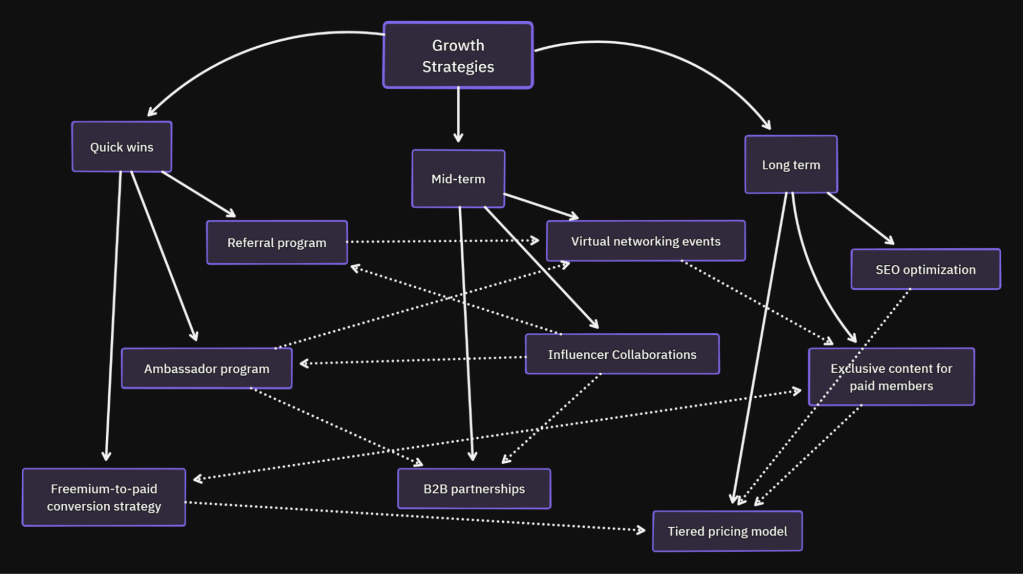
To address these challenges, I developed actionable solutions across three phases:
Quick wins: laying the foundation
- Referral program: Introduce incentives for existing users to refer others, leveraging tools like ReferralCandy or Tapfiliate.
- Ambassador program: Engage loyal users as advocates who promote the organization in exchange for rewards like early access to features.
- Freemium-to-paid conversion: Offer limited-time trials of premium features and use targeted email campaigns to showcase their value.
Mid-term strategies: amplifying impact
- Virtual networking events: Host monthly events to connect users and industry experts, boosting engagement and visibility.
- Influencer collaborations: Partner with thought leaders to co-create content and expand reach.
- B2B partnerships: Develop pilot programs for organizations, offering mentorship as a corporate benefit.
Long-term initiatives: scaling for sustainability
- SEO optimization: Improve website visibility through keyword strategies and user-friendly design.
- Exclusive paid content: Create a library of premium resources and workshops to enhance membership value.
- Tiered pricing model: Introduce flexible pricing options to attract individual users, mid-sized teams, and enterprise clients.
Implementation: from ideas to action
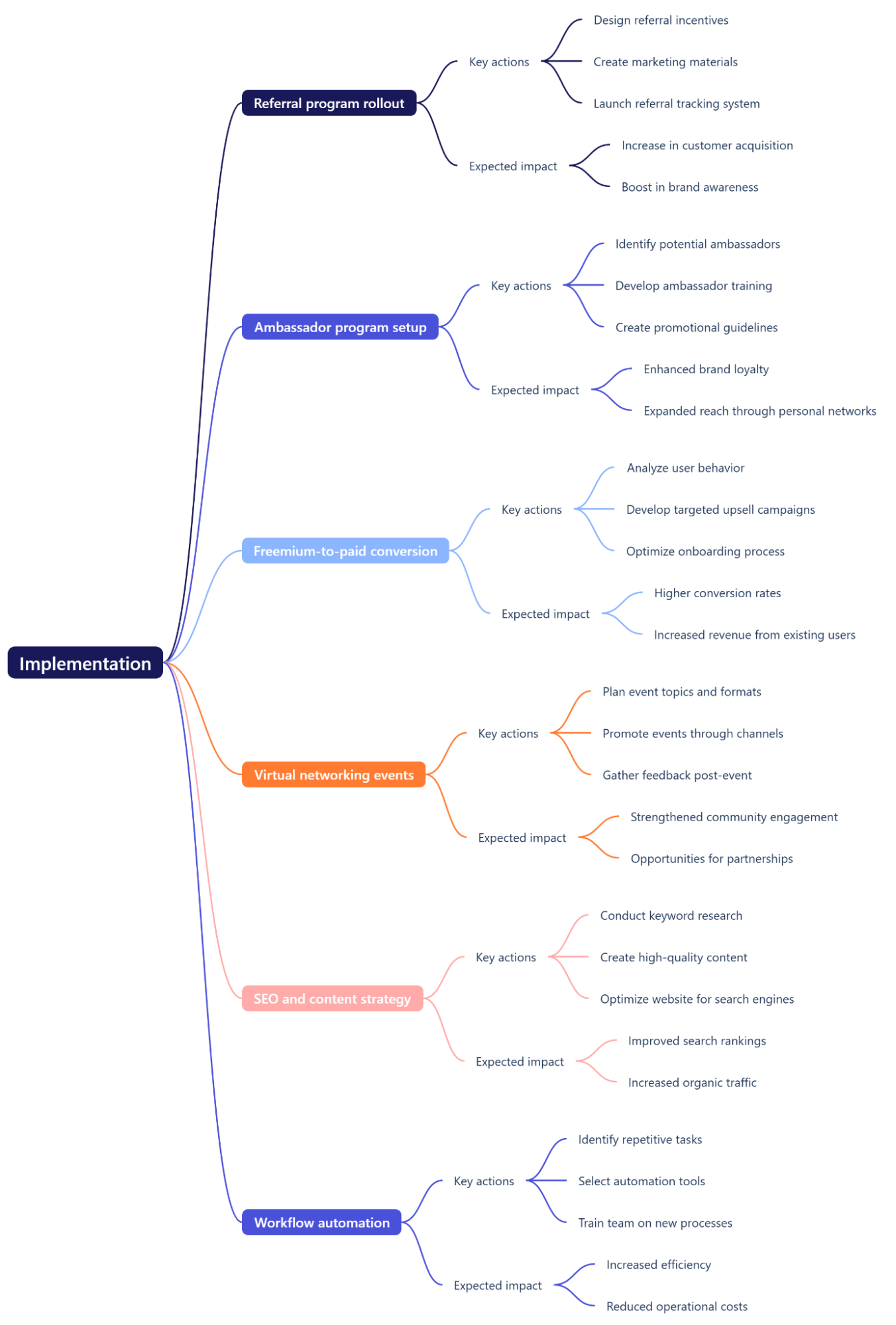
To transform the organization’s operations and scalability, I proposed a series of actionable steps tailored to their unique needs. Each step was designed to address immediate challenges while building a foundation for long-term growth. Below is a breakdown of the initiatives and how they can be implemented effectively:
1. Referral program rollout:
Design a referral program to leverage the organization’s existing user base to drive growth organically. The focus is on incentivizing loyal users to bring in new members, creating a cycle of engagement and expansion.
Key actions:
- Tool selection and integration: Implement referral tracking software, such as ReferralCandy, to manage and analyze referrals efficiently. This includes setting up unique referral codes or links for each user.
- Incentive design: Develop a reward structure that resonated with the target audience, offering perks such as discounts on premium memberships, free months of service, or gift cards.
- Clear communication materials: Design email templates, social media posts, and in-app notifications to explain the program’s benefits and encourage participation.
- Soft launch and optimization: Conduct a soft launch with a small group of users to test the program’s effectiveness, gather feedback, and make adjustments before a full rollout.
Expected impact:
- Increased user acquisition through organic referrals.
- Enhanced loyalty and engagement among existing users.
2. Ambassador program setup:
Design an ambassador program that is aimed at turning the most passionate users into advocates for the brand, amplifying visibility and building trust within the community.
Key actions:
- Ambassador identification: Develop selection criteria to identify loyal and engaged users who aligned with the organization’s mission.
- Role definition: Outline ambassador responsibilities, such as sharing content, participating in events, and promoting the brand within their networks.
- Incentive structure: Offer rewards like exclusive content, branded merchandise, early access to new features, and gamification elements such as badges and leaderboards.
- Onboarding and training: Create an onboarding process to educate ambassadors about the organization’s values, voice, and promotional best practices.
Expected impact:
- Strengthened community engagement and advocacy.
- Increased brand visibility through authentic, user-driven promotion.
3. Freemium-to-paid conversion:
To convert free users into paying members, focus on showcasing the value of premium features and creating a seamless upgrade process.
Key actions:
- Targeted email campaigns: Design segmented email campaigns highlighting the unique benefits of premium memberships, tailored to users’ professional backgrounds and interests.
- Time-limited trials: Offer free trials of premium features (e.g., 14 or 30 days) to allow users to experience the value firsthand, with follow-up campaigns to encourage upgrades.
- Upselling through content: Create in-app and email content that demonstrates how premium features could solve specific pain points or enhance users’ professional development.
Expected impact:
- Boosted conversion rates from free to paid users.
- Increased revenue while maintaining user satisfaction.

4. Virtual networking events:
Hosting virtual networking events as a strategic move to foster community engagement, position the organization as an industry leader, and provide value to users.
Key actions:
- Event planning: Schedule monthly events featuring industry experts, roundtable discussions, and Q&A sessions. Event topics should be aligned with users’ interests and professional goals.
- Platform selection: Choose interactive platforms like Zoom to facilitate engagement through breakout rooms, polls, and live Q&A.
- Promotion: Use email marketing, social media, and ambassador outreach to drive attendance and create buzz around the events.
- Post-event engagement: Share event recordings and key takeaways with attendees and the broader community to extend the value of the sessions.
Expected impact:
- Strengthened user connections and engagement.
- Enhanced the organization’s reputation as a thought leader in mentorship and professional development.
5. SEO and content strategy:
A robust SEO and content strategy should be developed to increase the organization’s visibility, drive organic traffic, and establish authority in the mentorship space.
Key actions:
- Keyword research: Conduct in-depth research to identify high-impact keywords related to mentorship, career growth, and professional development.
- Content calendar: Create a blog content calendar focused on topics relevant to the target audience, such as mentorship success stories, career tips, and industry trends.
- On-page optimization: Optimize website content, meta descriptions, and alt text to improve search engine rankings.
- Guest blogging: Collaborate with industry experts and influencers to contribute guest posts, expanding reach and building backlinks.
Expected impact:
- Increased organic traffic to the website.
- Enhanced brand authority and credibility.
6. Workflow automation:
To streamline operations and improve efficiency, we can introduce workflow automation tools and processes. This will allow the team to focus on high-impact work rather than repetitive tasks.
Key actions:
- Tool implementation: Roll out tools like ClickUp for project management, ReferralCandy for referral tracking, and ChatGPT Pro for content generation.
- Standardized templates: Create task templates for recurring processes such as content creation, email campaigns, and event planning.
- Training and adoption: Conduct training sessions to ensure smooth adoption of the tools, empowering the team to use them effectively.
- Monitoring and optimization: Establish KPIs to measure the effectiveness of the tools and processes, making data-driven adjustments as needed.
Expected impact:
- Reduced manual effort and operational inefficiencies.
- Improved team productivity and focus on strategic initiatives.
Projected impact: measurable outcomes
Implementing operational changes requires a clear understanding of the anticipated outcomes to ensure alignment with organizational goals and maximize return on investment. By leveraging industry benchmarks, proven strategies, and scalable systems, the following measurable outcomes were projected across key operational areas:
| Metric | Baseline (Industry average) | Projected outcome | Source/Benchmark |
| Cost per acquisition | Average reduction of 20-30% with referral programs | Up to 25% reduction in acquisition costs | Harvard Business Review: Referral Program Economics |
| Revenue growth potential | Freemium-to-paid models see conversion uplifts of 2x | 20-30% increase in recurring revenue | HubSpot: Freemium Pricing Strategy |
| Customer retention rates | OpenView SaaS Benchmarks: SaaS Revenue Benchmarks | 10-20% improvement with loyalty programs and exclusive content | SaaS Capital: Retention Benchmarks |
The numbers tell a story
The projected outcomes highlight the transformative power of a structured, data-driven approach to operations leadership. By organizing chaos, building scalable systems, and fostering a culture of empowerment, these strategies deliver measurable results that directly impact organizational growth, efficiency, and team morale.
Here is how:
- Streamlined workflows: Automation and process optimization can save over $100,000 annually in operational costs by reducing manual tasks and inefficiencies.
- Doubling conversion rates: A well-executed freemium-to-paid strategy could result in a 2x uplift in conversion rates, driving significant revenue growth.
- Improved retention: Loyalty programs and exclusive content can boost customer retention by 10-20%, fostering long-term relationships and reducing churn.
Results and outlook
By implementing these solutions, the organization can streamline operations, improve user engagement, and establish a scalable foundation for sustainable growth. Each initiative is tailored to align with the organization’s mission and values, ensuring that the impact was not only measurable but also meaningful.
This data-driven, people-first approach to operations leadership not only delivers measurable outcomes but also fosters a culture of excellence and empowerment, enabling organizations to thrive in competitive landscapes.
 Alex Gita | Driving Efficiency, Empowering Teams