
In today’s fast-paced digital landscape, even the most innovative platforms can struggle to engage their audiences. When I explored the challenges faced by a leading online education platform, I saw an opportunity to bridge the gap between their mission to transform lives and their low participation in online live events.
This case study reflects my ability to identify root challenges, design scalable solutions, and empower teams to deliver measurable results. By leveraging a personalized quiz feature, I proposed a strategy that not only enhances visibility and engagement but also strengthens community ties and creates pathways for growth. This approach showcases how thoughtful operational leadership can transform complexity into opportunities for impact.
Understanding the problem: low participation in online live events
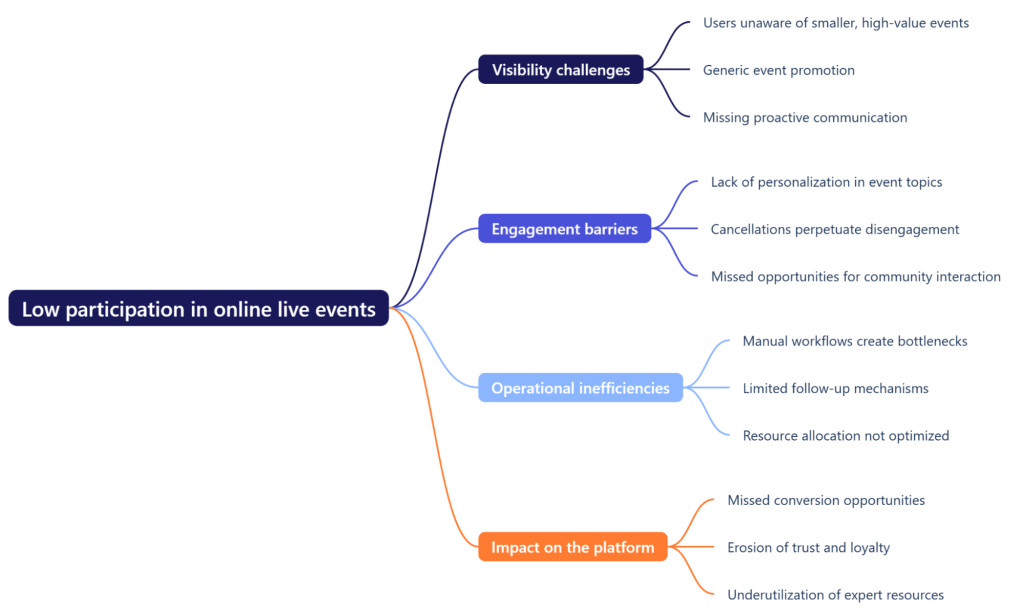
Low participation in online live events is a multifaceted challenge that impacts both user engagement and the platform’s ability to drive conversions to higher-tier offerings. Based on my personal experience with the platform and informed assumptions, I identified three primary problem areas: visibility challenges, engagement barriers, and operational inefficiencies. Below, I’ve outlined how these issues manifest and their potential impact.
Visibility challenges
The lack of awareness and ineffective promotion of events are significant contributors to low participation. Specifically:
- Users are unaware of many smaller, high-value events: While flagship events are well-publicized, smaller offerings often go unnoticed.
- Event promotion feels generic: Unlike the personalized experience offered for mini-courses, event announcements are not tailored to individual preferences, making them less compelling.
- Proactive communication is missing: Users must actively search for event details, as notifications and reminders are inconsistent or absent.
Engagement barriers
Engaging users in live events requires relevance and trust, but several factors currently hinder participation:
- Lack of personalization in event topics: Events often feel disconnected from users’ individual goals, reducing motivation to attend.
- Cancellations perpetuate disengagement: Events canceled due to low registrations discourage users from signing up for future opportunities.
- Missed opportunities for community interaction: Live events are underutilized as a tool to foster connections and build a sense of belonging within the platform’s community.
Operational inefficiencies
Behind the scenes, operational challenges limit the scalability and effectiveness of the platform’s event offerings:
- Manual workflows create bottlenecks: Event planning and promotion processes are likely manual, slowing responsiveness to user needs.
- Limited follow-up mechanisms: There is no structured feedback loop to gather user insights or assess event success.
- Resource allocation is not optimized: Events are scheduled without clear alignment to user demand, leading to wasted resources and lower ROI.
Impact on the platform
These challenges collectively hinder the platform’s ability to fully engage its user base and achieve its business objectives. Low participation in live events likely results in:
- Missed conversion opportunities: Without robust participation, the platform loses a critical touchpoint to guide users toward premium offerings.
- Erosion of trust and loyalty: Cancellations and generic experiences risk alienating users and reducing retention.
- Underutilization of expert resources: The platform’s network of thought leaders is not leveraged effectively to showcase value or drive engagement.
By addressing these challenges, the platform has the opportunity to significantly enhance user engagement, strengthen community ties, and create a more seamless path to higher-tier offerings. This thought process reflects my approach to identifying key issues and proposing actionable solutions.
My approach: designing a personalized, scalable solution
To address the challenges of low participation in online live events, I proposed a personalized quiz feature designed to enhance visibility, increase engagement, and align events with user interests. The solution was guided by three core principles: personalization, scalability, and operational efficiency. Below is an overview of how each principle was to be implemented to create a holistic and impactful strategy.
1. Personalizing the user experience
At the heart of the solution was the goal of tailoring the event experience to individual users. By leveraging a quiz-based feature, the platform could better understand user preferences and ensure that event recommendations felt relevant and valuable.
Key components of the personalized approach:
- Quiz-based recommendations: Users would complete a short quiz to rank their interests across categories like career development, mindfulness, and entrepreneurship. This data would allow the platform to suggest events that aligned with their goals and aspirations.
- Voting system: A built-in voting feature would enable users to voice their preferences for future event topics. This not only ensured alignment with user demand but also fostered a sense of ownership and collaboration within the community.
- Targeted outreach: Personalized email campaigns and in-app notifications would deliver event recommendations directly to users, ensuring they were aware of opportunities tailored to their interests.
By putting users at the center of the decision-making process, this approach aimed to create a more engaging and satisfying experience, while also driving higher participation rates.

2. Building scalable systems
To ensure the solution could grow alongside the platform, I focused on designing systems that were both sustainable and adaptable. Scalability was key to meeting increased demand without compromising quality or efficiency.
Examples of scalable systems included:
- Automation: By automating workflows for event scheduling, promotion, and feedback collection, the platform could reduce manual effort and free up resources for strategic initiatives.
- Data-driven insights: Leveraging user data from the quiz and engagement metrics allowed the platform to identify high-demand topics and optimize event planning. This ensured that resources were allocated effectively and events resonated with the audience.
- Feedback loops: A system was to be established to collect and analyze user feedback after each event. This continuous improvement cycle ensures that the platform could adapt to user needs and preferences over time.
These scalable systems not only enhanced operational efficiency but also positioned the platform to handle future growth with ease.
3. Empowering the team
A people-first approach was central to the strategy, ensuring that the solution was not only efficient but also aligned with the team’s capabilities and goals. By empowering team members, the platform could foster a culture of collaboration and innovation.
Key initiatives to empower the team included:
- Training and onboarding: Team members were to be equipped with the tools and knowledge needed to manage the new workflows effectively. This included training on automation tools and best practices for personalized engagement.
- Standard operating procedures (SOPs): Clear and concise SOPs were to be developed for event planning, promotion, and follow-up. These guidelines ensure consistency, accountability, and a shared understanding of expectations.
- Technology integration: Tools like project management software were recommended to streamline operations and reduce repetitive tasks. This allows the team to focus on high-impact activities, such as creative event design and user engagement.
By empowering the team with the right tools, training, and processes, the solution not only addressed operational challenges but also created a foundation for long-term success.
The impact of this approach
This personalized, scalable, and team-centric solution was designed to address the root causes of low participation in online live events. By aligning events with user preferences, building systems for growth, and empowering the team, the platform could significantly enhance user engagement, strengthen community ties, and unlock new opportunities for growth.
Proposed solutions: a phased roadmap for growth
To effectively implement the strategy and drive meaningful engagement, I designed a phased roadmap that balances immediate actions with long-term scalability. This approach ensures the solution evolves alongside the platform, delivering sustained impact over time.
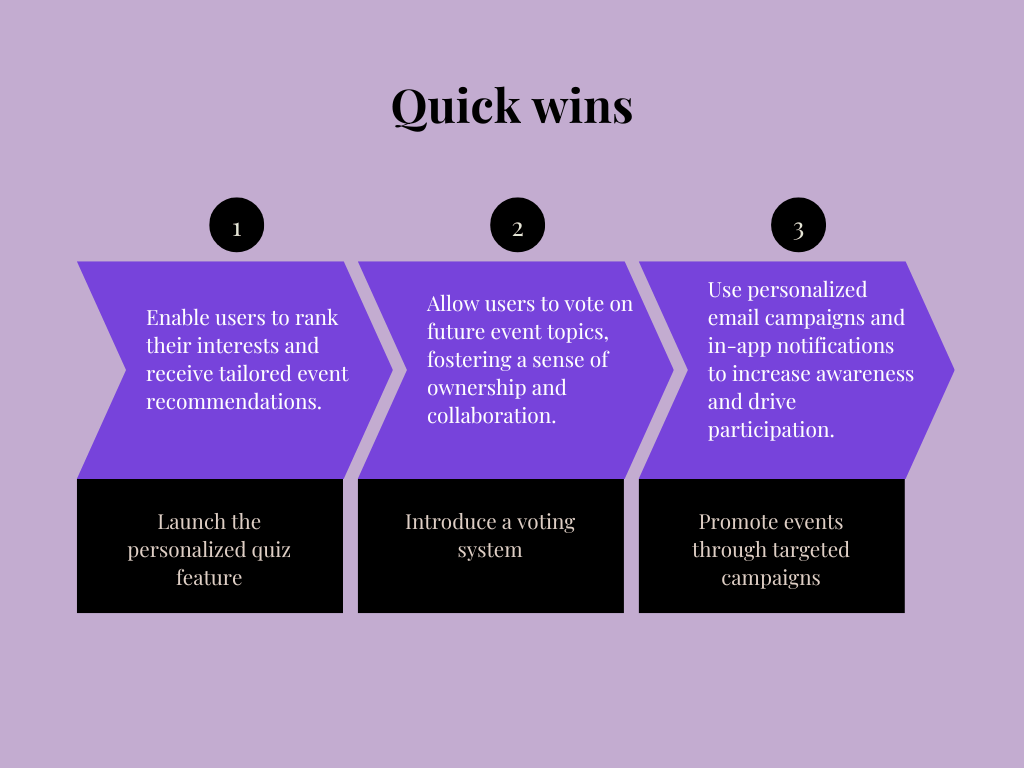
1. Quick wins: laying the foundation
The initial phase focuses on establishing the core components of the strategy to deliver immediate results and build momentum.
Key actions include:
- Launch the personalized quiz feature: Enable users to rank their interests and receive tailored event recommendations.
- Introduce a voting system: Allow users to vote on future event topics, fostering a sense of ownership and collaboration.
- Promote events through targeted campaigns: Use personalized email campaigns and in-app notifications to increase awareness and drive participation.
Why this matters: These quick wins are designed to address the visibility and engagement challenges while requiring minimal resources to implement. They also serve as the foundation for the more advanced strategies in subsequent phases.
2. Mid-term strategies: amplifying impact
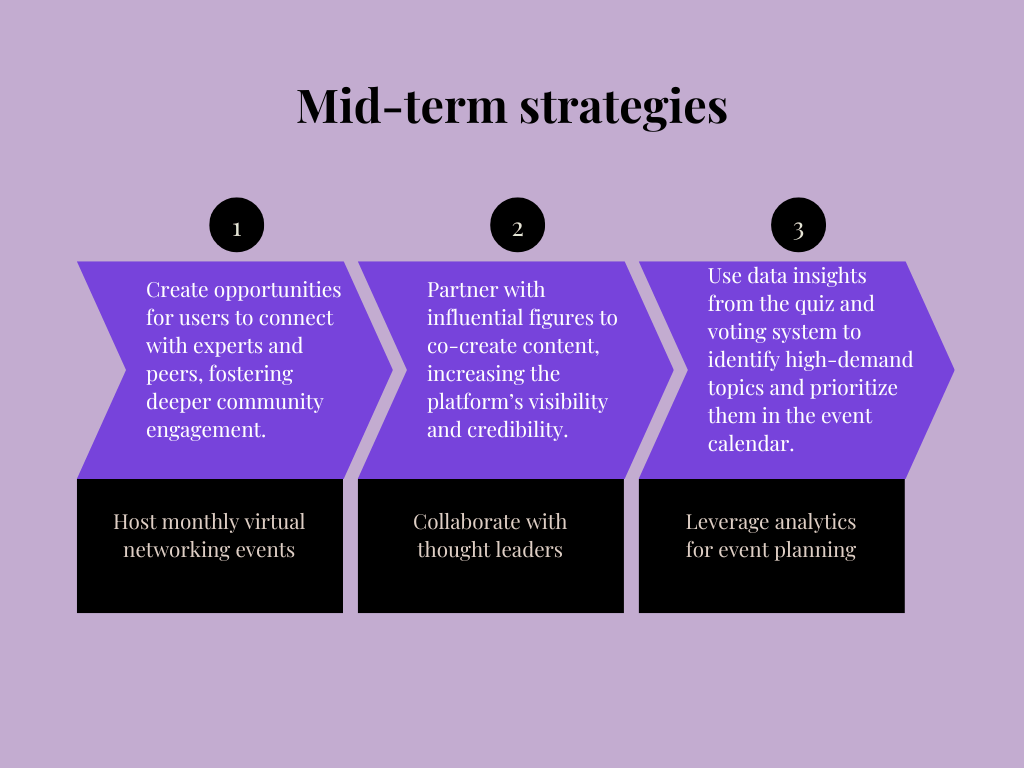
Once the foundational features are in place, the focus shifts to amplifying user engagement and expanding the platform’s reach.
Key initiatives include:
- Host monthly virtual networking events: Create opportunities for users to connect with experts and peers, fostering deeper community engagement.
- Collaborate with thought leaders: Partner with influential figures to co-create content, increasing the platform’s visibility and credibility.
- Leverage analytics for event planning: Use data insights from the quiz and voting system to identify high-demand topics and prioritize them in the event calendar.
Why this matters: These strategies build on the initial successes by deepening user engagement and expanding the platform’s value proposition. They also position the platform as a leader in personalized, interactive learning experiences.
3. Long-term initiatives: scaling for sustainability
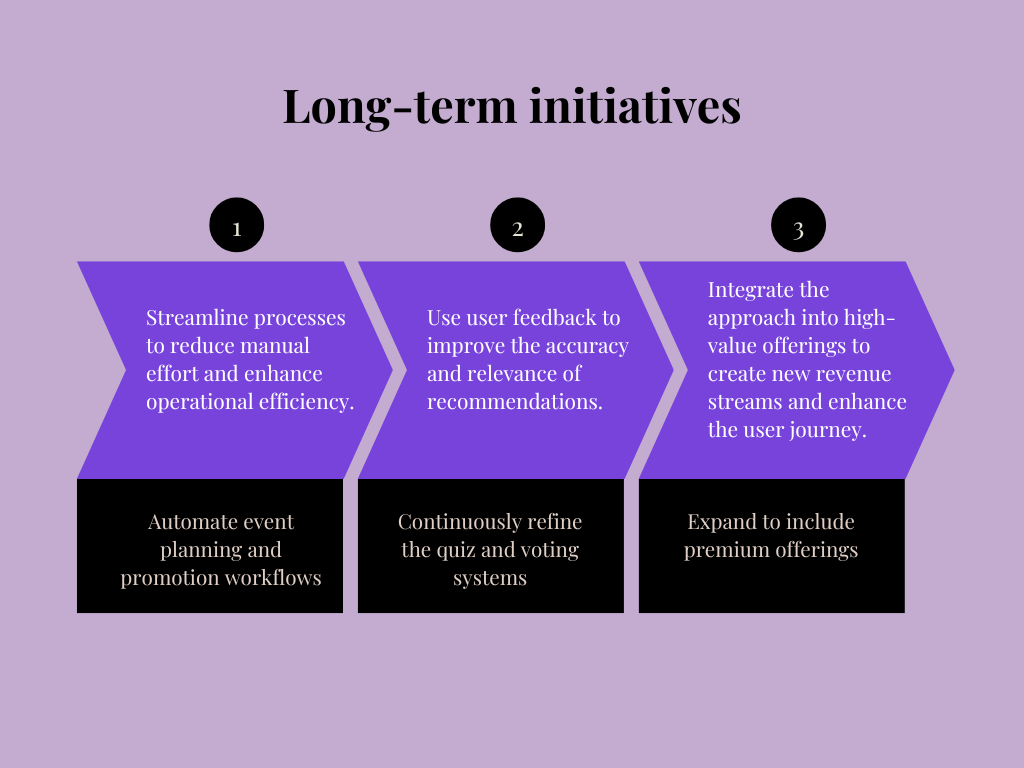
The final phase focuses on creating a robust, scalable system that ensures the long-term success of the strategy.
Key initiatives include:
- Automate event planning and promotion workflows: Streamline processes to reduce manual effort and enhance operational efficiency.
- Continuously refine the quiz and voting systems: Use user feedback to improve the accuracy and relevance of recommendations.
- Expand to include premium offerings: Integrate the approach into high-value offerings to create new revenue streams and enhance the user journey.
Why this matters: Long-term initiatives ensure the platform can scale its offerings without compromising quality, while also unlocking new growth opportunities.
Results: projected impact
The proposed strategy is designed to deliver both measurable and intangible benefits, addressing the root challenges while driving growth and engagement.
Tangible outcomes:
These measurable results highlight the direct impact of the proposed solution on user engagement and the platform’s business objectives:
- Event participation: Each event is projected to attract at least 25 registered users, with an 80% show-up rate.
- User satisfaction: Engagement surveys are expected to show a 30–40% increase in satisfaction scores.
- Revenue growth: By generating warm leads for premium offerings, the initiative could contribute to a measurable increase in conversions.
Intangible benefits:
Beyond measurable results, the strategy is designed to foster long-term, intangible benefits that strengthen the platform’s community and brand:
- Strengthened community bonds: Collaborative event planning fosters a sense of belonging and shared purpose among users.
- Enhanced brand loyalty: Demonstrating a commitment to user needs reinforces trust and loyalty.
- Empowered users: By involving users in the decision-making process, the platform enables them to take ownership of their learning journeys.

Transforming engagement through personalization
This case study demonstrates how a personalized, scalable approach can transform user engagement in online education platforms. By aligning events with user interests, fostering community interaction, and streamlining operational workflows, the proposed solution reflects my ability to organize chaos, build scalable systems, and empower teams for long-term success.
The results—both tangible and intangible—highlight how thoughtful operational strategies can unlock new opportunities for growth while strengthening trust and loyalty. At its core, this initiative isn’t just about boosting participation; it’s about inspiring excellence, fostering collaboration, and driving meaningful impact.
 Alex Gita | Driving Efficiency, Empowering Teams